NEW YORK (AP) — NASA's Hubble Space Telescope got a rare look at the aftermath of two cosmic collisions — and helped scientists solve a decades-old mystery.
Many years ago, scientists saw a dense, bright spot near a young star called Fomalhaut. They thought it could be a planet and continued to track it.
But in 2023, Hubble's pictures revealed something strange. The bright spot had vanished — and a new one had appeared — a sign that it wasn't a planet after all.
Scientists had stumbled on the dusty debris from two cosmic crashes. Massive space rocks slammed together to create clouds of dust that were thick enough to masquerade as planets. Over time, the remains spread out and eventually disappeared altogether.
Scientists think the space rocks involved in the collision were at least 37 miles (60 kilometers) wide. It's rare to capture such clashes on camera, especially since theories suggest they only happen in the same vicinity about once every 100,000 years.
It’s “highly unexpected” that this area “has now exhibited two, unique, massive collisions inside 20 years,” said Joshua Lovell with the Harvard-Smithsonian Center for Astrophysics in an email. He had no role in the study, which was published Thursday in the journal Science.
The new observations could just be a lucky find. Or, they could mean that such smashups happen more often than scientists thought. It'll take more data to know for sure.
Collisions of large space rocks are essential to how planets like ours form and what they're made of. Studying them is “like taking a toddler picture of our solar system,” said astrophysicist Meredith MacGregor with Johns Hopkins University, who was not involved with the study.
Researchers plan to track the new dust cloud in the coming years to see how it changes and eventually disintegrates.
The star near the collision site is in our cosmic neighborhood, just 25 light years from Earth. A light year is nearly 6 trillion miles.
By keeping an eye on it, scientists are “catching these violent explosions in real time,” said study author Paul Kalas with the University of California, Berkeley.
___
The Associated Press Health and Science Department receives support from the Howard Hughes Medical Institute’s Department of Science Education and the Robert Wood Johnson Foundation. The AP is solely responsible for all content.
latest_posts
- 1
 Novo Nordisk justifies reasoning behind failed GLP-1 Alzheimer's trials
 - 27 Extraordinary Efficiency Applications for Experts
- 3Parents who delay baby's first vaccines also likely to skip measles shots
- 4Slims down for Maintainable Weight reduction
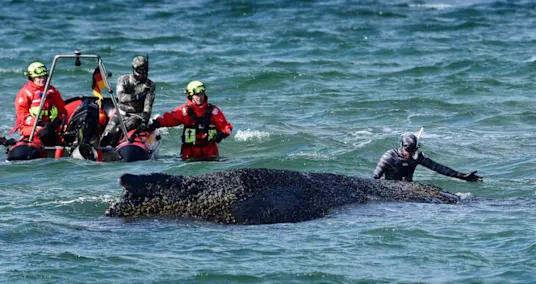
- 5It Shouldn’t Be Here: Rescuers Race to Save Whale Stranded in Rare Spot


- Doctors say changes to US vaccine recommendations are confusing parents and could harm kids
- Obamacare enrollment declines as US subsidies expire
- Hostages as leverage: Iran's secret demand aimed at crippling Israel's agriculture
- The pace of hiring just fell to the lowest since 2011, outside of the pandemic
- Best Disney Palace: Which One Catches Your Creative mind?
- Vote In favor of Your Number one Cell phones
- The most effective method to Pick A Trade-in vehicle Stage
- Pick Your Favored kind of books
- Eight wounded, cars catch fire in central Israel following strike from Iranian cluster munition