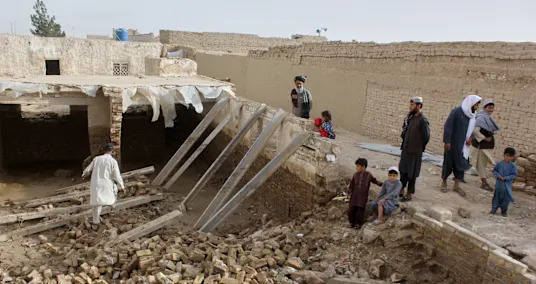
Heavy rain that has caused severe flooding and landslides has killed at least 45 people in Afghanistan and Pakistan over the past five days, authorities say.
Afghanistan’s National Disaster Management Authority (ANDMA) said on Monday that 28 people have been killed in the floods and 49 injured with more than 100 homes destroyed.
Most of the deaths in Afghanistan were reported in central and eastern provinces, including Parwan, Maidan Wardak, Daikundi and Logar, according to ANDMA.
The authority added in a statement that weather conditions remained “unstable” in parts of the country and there is a continued risk of more rain and flooding in some areas.
“In total, 1,140 families have been affected,” ANDMA said.
Police spokesperson Sediqullah Seddiqi told the AFP news agency a 14-year-old boy died after being struck by lightning in the northwestern province of Badghis.
He added that in the same province, three people had drowned while trying to gather driftwood to be used for heating.
At the same time in Pakistan’s Khyber Pakhtunkhwa province, which shares a border with Afghanistan, 17 people were killed and 56 wounded, the Provincial Disaster Management Authority said.

Extreme weather
Heavy rainfall has continued to sweep across Afghanistan since Thursday, causing floods and landslides in multiple provinces.
The weather prompted the closure of several highways, according to officials in central and eastern Afghanistan. Further rains and storms are forecast for Tuesday.
Afghanistan’s National Disaster Management Authority has warned citizens to refrain from using “rivers and flooded streams, and follow the weather forecast seriously”.
In the central province of Daikundi, the local disaster management department said a five-year-old was killed when a roof collapsed. A woman was also killed in the same circumstances in the eastern province of Nangarhar, police spokesperson Sayed Tayeb Hamad said.
Afghanistan is vulnerable to extreme weather, particularly heavy rainfall and monsoon seasons, which trigger floods and landslides in remote areas with fragile infrastructure.
In January, flash floods and snowfall caused the deaths of at least 17 people and killed livestock.
latest_posts
- 1
 The Ascent of Rousing Pioneers Who Formed History
- 2Intriguing Social Unesco World Legacy Locales All over The Planet
- 3Overlooked infertility care should be part of national health services, says WHO
- 44 Must-Visit bar-b-que Eateries This Year
- 5Undeniably popular Historical centers: Where Craftsmanship and History Meet


- Figure out How to Pick a SUV with Senior-Accommodating Tech Elements
- Flourishing in a Cutthroat Work Market: Vocation Methodologies
- EU top diplomat Kallas arrives in Kiev to commemorate Bucha massacre
- Four countries to boycott Eurovision 2026 over Israel’s inclusion
- The most effective method to Plan an Incineration Administration: A Bit by bit Guide.
- 'Heated Rivalry's Ilya Rozanov is now a queer icon in Russia
- China's Normal Ponders: A Visual Excursion
- A definitive Handbook for Securities exchange Money management
- Toilet rats? Washington health officials warn of possible rodents in sewer systems after floods